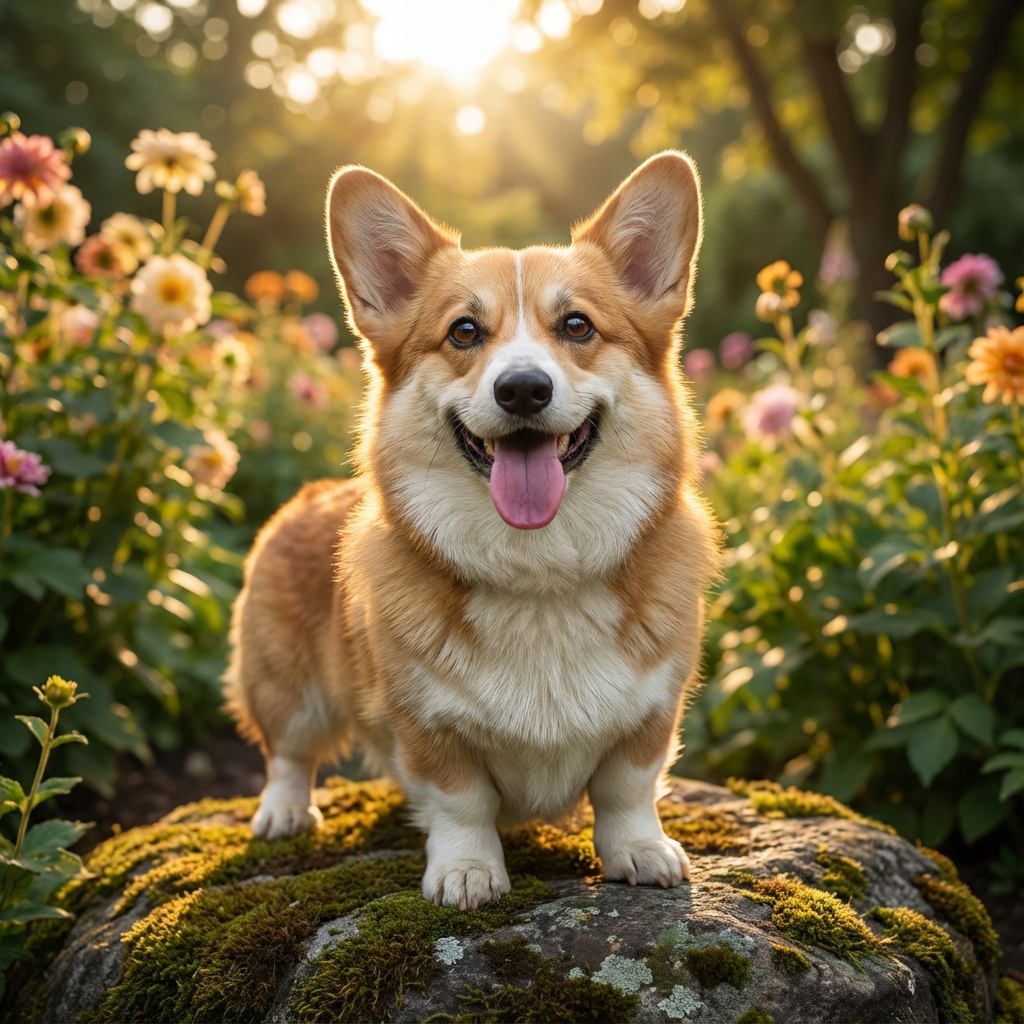
Pembroke Welsh Corgi
The Pembroke Welsh Corgi is a low-set cattle herding breed originating in Pembrokeshire, Wales, known for its dwarf stature, foxy face, and association with Queen Elizabeth II.
The Pembroke Welsh Corgi is a distinctive breed with a foxy face, long body, upright ears, and short legs resulting from achondroplastic dwarfism. Despite their compact size, they are tough, agile working dogs.
Corgis were bred to herd cattle by nipping at their heels. Their low stature allowed them to duck safely under the flying hooves of cows. This heritage makes them fearless, bossy, and surprisingly agile. Today, they are internet superstars and the beloved companions of royalty, but the heart of a tenacious herder still beats in their chest.
History and Origin: The Royal Dog
The Pembroke Welsh Corgi originated in Pembrokeshire, Wales.
- Ancient Roots: Their ancestry dates back to 1107 AD, when Flemish weavers migrated to Wales at the invitation of Henry I. They brought their spitz-type dogs with them, which were the ancestors of the modern Pembroke.
- The Legend: Welsh folklore says that Corgis were the “enchanted dogs” of the fairies and elves. They were used by the fairy folk to pull their coaches and work their cattle. If you look closely at a Corgi’s shoulders, you can still see the “fairy saddle” markings where the harness was placed.
- The Queen’s Favorite: The breed gained worldwide fame thanks to Queen Elizabeth II. Her father, King George VI, gave her a Corgi named Dookie in 1933. She went on to own more than 30 Corgis during her reign, cementing the breed as a symbol of British royalty.
Pembroke vs. Cardigan
There are two distinct breeds of Corgi: the Pembroke and the Cardigan. They are not just color variations; they come from different ancestors.
- Pembroke: Smaller, straighter legs, “foxy” face, pointed ears, and naturally bobbed or docked tail.
- Cardigan: Larger, heavier bone, “round” ears, and a long fox-like tail.
Physical Characteristics: Big Dog on Short Legs
The Corgi is a dwarf breed (achondroplasia). He is built like a large dog, but his legs are short. He is substantial and sturdy, not fragile like a toy breed.
- Height: 10–12 inches (25-30 cm).
- Weight: Males up to 30 pounds (14 kg); Females up to 28 pounds (13 kg).
Distinctive Features
- The Body: Long and low. He should be nearly twice as long as he is tall.
- The Ears: Upright, firm, and pointed at the tip. They are mobile and expressive.
- The Tail: Pembrokes are often born with a natural bobtail. If not, the tail is traditionally docked in countries where it is permitted.
- The Coat: A thick, weather-resistant double coat. Common colors include Red, Sable, Fawn, and Black and Tan, often with white markings on the legs, chest, neck, and muzzle.
- The “Sploot”: Corgis are famous for lying flat on their bellies with their back legs stretched out behind them like frog legs. This poses is affectionately known as a “sploot.”
Temperament and Personality
Corgis have huge personalities. They think they are big dogs.
The Fun Police
As herding dogs, they crave order. They like to control movement. They will herd anything that moves—children, other dogs, ducks, or you. If you run, they might nip at your heels to get you back in line. This is not aggression; it is instinct.
The Watchdog
They are very alert and surprisingly vocal. They have a “big dog bark” that sounds like it comes from a German Shepherd. They will warn you of any intruders, delivery trucks, or leaves blowing across the driveway.
The Socialite
They love their families. They are happy, outgoing dogs that generally get along well with everyone. They are affectionate and love to be the center of attention. However, they can be bossy with other dogs. A Corgi will often rule the roost, even if he lives with a Great Dane.
Training and Exercise Needs
Exercise: Surprisingly Active
Corgis are energetic dogs. They were bred to work all day in the Welsh hills.
- Daily Needs: At least an hour of exercise daily. Walking, moderate running, and fetching are great.
- Agility: They excel at agility trials and perform well over jumps set to their height.
- Mental Stimulation: They are smart and need brain games to prevent boredom.
Back Safety (IVDD)
Because of their long backs, you must be careful.
- No Jumping: Do not let them jump on or off high furniture or run down steep stairs. The impact can cause a ruptured disc (Intervertebral Disc Disease), leading to pain or paralysis. Use ramps for the sofa and bed.
- Carrying: Always support both the chest and the rear when picking them up.
Training: The Smart Cookie
They are ranked the 11th smartest dog breed by Stanley Coren. They learn fast, but they can be stubborn and manipulative.
- Food Motivation: They will do anything for a treat. This makes training easy, but watch the calories!
- Leadership: You must set boundaries, or the Corgi will run the house. He is a “pushy” dog by nature.
Health and Lifespan
Corgis generally live 12 to 15 years, but they have specific health concerns.
- Intervertebral Disc Disease (IVDD): This is the biggest risk. Keeping them lean and preventing jumping is the best prevention.
- Hip Dysplasia: Yes, even with short legs, they can have bad hips.
- Degenerative Myelopathy (DM): A progressive, painless spinal disease that causes paralysis in older dogs. It is similar to ALS in humans. A DNA test is available.
- Eye Issues: Progressive Retinal Atrophy (PRA).
- Obesity: A major health risk.
Grooming and Care: The Glitter
- Shedding: Corgis shed. A lot. They shed daily and “blow coat” twice a year. You will find “Corgi glitter” (fur) on your clothes, your furniture, and in your food.
- Brushing: Daily brushing helps control the fur.
- Bathing: As needed.
- Nails: Keep them short to help the foot stay compact.
Is a Pembroke Welsh Corgi Right for You?
The Corgi is a delightful companion, but he is not a low-maintenance dog.
Yes, if:
- You want a smart, active dog in a smaller package. You want a “big dog” personality.
- You have a sense of humor. He will make you laugh every day.
- You don’t mind shedding. You own a good vacuum cleaner.
- You are willing to train. You can handle a bossy dog.
No, if:
- You live in a walk-up apartment. Stairs are bad for his back.
- You want a quiet dog. He barks.
- You want a lap dog that just sleeps all day. He needs action.
- You have very small children. The heel-nipping instinct can be a problem.
The Pembroke Welsh Corgi is a breed with herding heritage and a bold, friendly temperament. Those who can accommodate the shedding and vocal tendencies will find a loyal and lively companion.
Related Breeds

Alaskan Klee Kai
The Alaskan Klee Kai is a small, energetic spitz breed developed in Alaska in the 1970s, resembling ...

American Eskimo Dog
The American Eskimo Dog is a Nordic spitz breed descended from German Spitz dogs, known for its whit...

American Hairless Terrier
Smart, spirited, and hypoallergenic, the American Hairless Terrier is a lively companion that thrive...