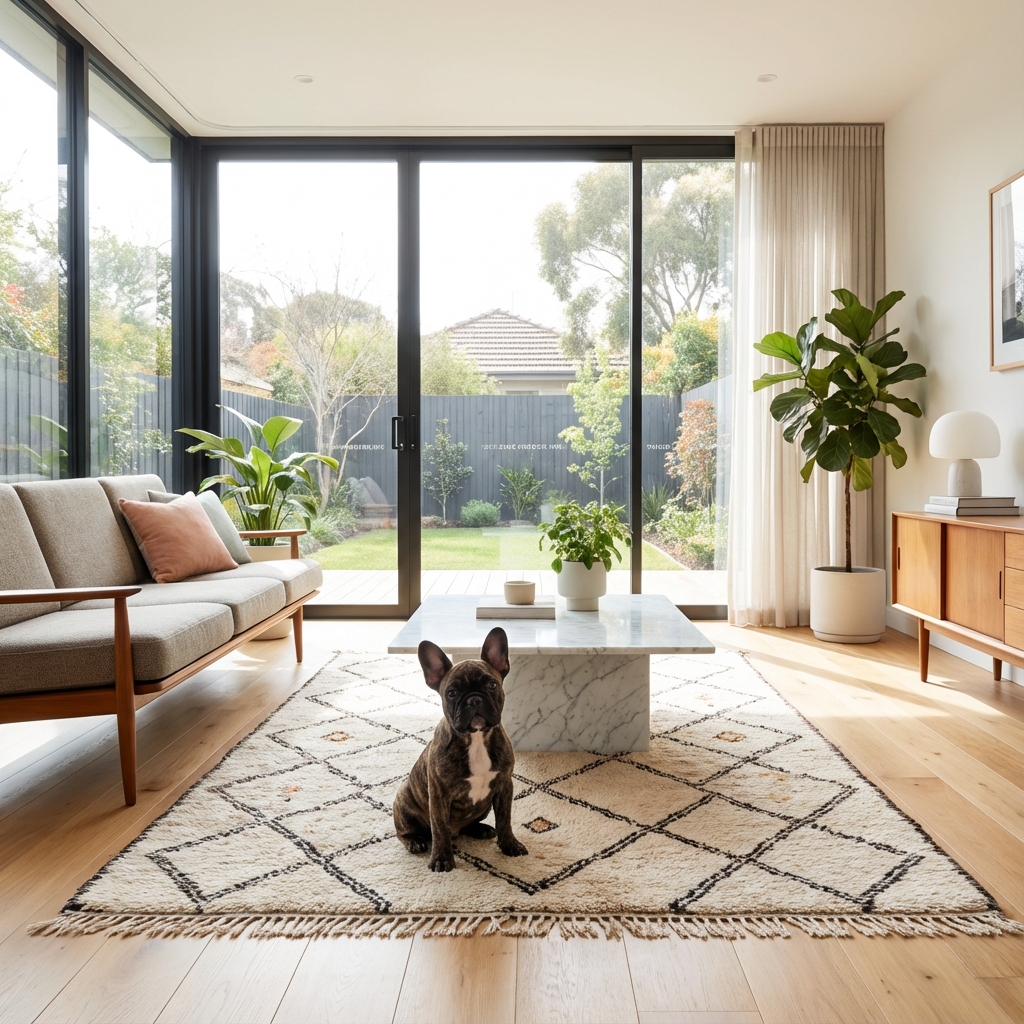
French Bulldog
The French Bulldog is a small brachycephalic companion breed developed from English Bulldog stock in 19th-century France, now one of the most popular breeds globally, known for its bat ears, compact build, and significant health considerations.
In 2022, the French Bulldog ended the Labrador Retriever’s 31-year reign as America’s most popular dog breed. In 2023, they did it again. They have now held the top spot for multiple years running—and globally, they are among the most searched, most purchased, and most photographed dogs on the planet.
This is remarkable for a breed with genuinely significant health problems. The Frenchie’s rise represents something interesting about what people actually want from a dog in a modern urban life: small enough for an apartment, calm enough for a busy schedule, charismatic enough to entertain, and affectionate enough to make the couch worth coming home to.
The French Bulldog delivers all of that with considerable style, though with significant health and financial costs that prospective owners should understand before acquiring one.
Where the Bat Ears Came From
The Frenchie’s story starts in Nottingham, England, during the Industrial Revolution. English lace workers kept small Bulldogs as both companions and rat-catchers. When mechanization made their trade obsolete, many workers migrated to France—taking their dogs with them.
In France, these small English Bulldogs became fashionable across social classes—from Parisian working-class neighborhoods to the salons of society women, writers, and artists. They were crossed with other breeds (likely Terriers and Pugs) to produce a lighter, more animated version. Artists painted them. Toulouse-Lautrec included them in his work. They became officially French in character, if not quite in origin.
When Americans began visiting Paris in the late 1800s, they fell hard for the breed. But Americans had one strong aesthetic preference: the upright “bat ear” rather than the folded “rose ear” that was common in England. This preference—which American buyers defended fiercely—ultimately established the bat ear as the defining feature of the French Bulldog. It was Americans who built the breed standard around it.
The AKC recognized the French Bulldog in 1898.
What He Looks Like (And Why It Matters)
The Frenchie is compact, heavily muscled for his size, and unmistakably himself. He stands 11–13 inches tall and weighs under 28 pounds—though a well-conditioned Frenchie feels substantially heavier than he looks. He is dense.
- The bat ears: Broad at the base, rounded at the tip, permanently upright. No other breed has quite this ear shape.
- The face: Flat, heavily wrinkled, with a very short muzzle. The wrinkles require daily cleaning to prevent bacterial infections in the folds.
- The tail: Naturally short and either straight or screwed—not docked.
- Colors: Classic colors include brindle, fawn, and white. “Exotic” or “rare” colors (blue, chocolate, lilac, merle) have become widely popular but are not recognized by major breed standards and are sometimes associated with additional health problems, including Color Dilution Alopecia.
Life With a Frenchie
Frenchies sleep a lot. This is not a complaint—it is their primary mode of existence. They wake up, make you laugh with their sounds (snorts, yodels, grumbles, the full catalog), have a brief period of energetic play or vigorous zoomies (usually lasting 3–7 minutes), and then return to sleeping with complete commitment.
This low-energy lifestyle is genuinely appealing for city dwellers and people with limited outdoor space. A Frenchie does not need a large yard. Two short walks daily plus some indoor play satisfies most individuals. They adapt remarkably well to apartment living as long as the apartment has air conditioning—which brings us directly to the most important practical consideration of French Bulldog ownership.
Heat is a genuine emergency risk. Frenchies are brachycephalic—their compressed facial structure means their airways are physically narrower and longer relative to their size than in normal-muzzled dogs. They cannot cool themselves through panting as efficiently as other breeds. In hot, humid weather, a French Bulldog can develop heatstroke within minutes. They must not be exercised outdoors in temperatures above approximately 75°F (24°C). They cannot swim unassisted—their top-heavy build makes them sink. Air conditioning is not a luxury for a Frenchie; it is a health requirement.
They are also extremely sensitive to solitude. Separation anxiety is common in the breed—howling, destructive behavior, and genuine distress when left alone for extended periods. If you work long office hours five days a week with no dog walker or arrangement, the Frenchie will be miserable.
The Real Cost of Ownership
Frenchies consistently rank among the most expensive dogs to own. This deserves plain discussion:
- Purchase price: Quality Frenchies from health-tested breeders typically cost $3,000–$6,000+ in the US. “Exotic” color dogs can be significantly more.
- Breathing surgery: Many Frenchies have Brachycephalic Obstructive Airway Syndrome (BOAS) severe enough to require corrective surgery—widening the nostrils, shortening the elongated soft palate. This typically costs $2,000–$5,000 and significantly improves quality of life. Plan for it.
- Spinal problems: Like other chondrodystrophic (dwarf) breeds, Frenchies are prone to Intervertebral Disc Disease (IVDD). Back problems can appear suddenly and may require surgical intervention costing several thousand dollars.
- Skin allergies: Common and often chronic, requiring ongoing management.
- Reproduction: Frenchies almost universally require artificial insemination to breed (narrow hips) and C-sections to deliver (large heads, narrow birth canals). This is why puppies are expensive—responsible breeding is costly.
- Pet insurance: Highly recommended. Many Frenchie owners consider it non-negotiable.
Health Summary
Lifespan: 10–12 years. Key concerns:
- BOAS (breathing difficulties) – affects most individuals to some degree
- IVDD (spinal disc disease) – avoid stairs and jumping from height
- Skin allergies – chronic in many dogs
- Eye conditions – their prominent eyes are vulnerable to injury and conditions like cherry eye and corneal ulcers
- Ear infections – the narrow ear canals need regular cleaning
Grooming
Weekly brushing with a soft brush. Daily wiping of all facial folds with a damp cloth or pet-safe wipes—dry thoroughly afterward. Check and clean the tail pocket (the indentation under the tail) weekly. Nail trims every 3–4 weeks.
The Honest Bottom Line
The French Bulldog is an extraordinary companion for the right household—urban, moderate-activity, climate-controlled, and financially prepared for meaningful veterinary costs. He is funny, warm, exceptionally adaptable, and genuinely good-natured.
He is not the right dog if you want a running partner, if you live somewhere with hot summers and no AC, if you’re on a very tight budget, or if you work long hours without a care plan.
The French Bulldog’s rise to the top of popularity rankings reflects its genuine appeal as an urban companion. Prospective owners should approach the decision with a clear understanding of the breed’s health needs and associated costs.
Related Breeds

Alaskan Klee Kai
The Alaskan Klee Kai is a small, energetic spitz breed developed in Alaska in the 1970s, resembling ...

American Eskimo Dog
The American Eskimo Dog is a Nordic spitz breed descended from German Spitz dogs, known for its whit...

American Hairless Terrier
Smart, spirited, and hypoallergenic, the American Hairless Terrier is a lively companion that thrive...