
Irish Wolfhound
The gentle giant of Ireland, the Irish Wolfhound is the tallest of all dog breeds, known for his immense size and calm, kindly nature.
The Irish Wolfhound is the tallest of all dog breeds. He is a massive, rough-coated giant who, when standing on his hind legs, can reach approximately seven feet tall. His imposing size belies his true nature. He is known for a calm, quiet, and gentle temperament, described in the old Irish proverb: “Gentle when stroked, fierce when provoked.” In modern life, however, he is rarely aggressive. He is an affectionate dog who enjoys close contact with his family.
History and Origin: The War Dog of Legend
The history of the Irish Wolfhound is woven into the myths and legends of ancient Ireland. He dates back to antiquity, likely arriving in Ireland with the Celts. In ancient times, he was a fearsome war dog, used to drag men off chariots and horses in battle. He guarded the castles of High Kings and was so valuable that wars were fought over him. He was often given as a royal gift to foreign emperors and kings, wearing collars of silver and gold. His primary job, however, was hunting. He hunted the giant Irish Elk and the wolf. He was so efficient at his job that he eventually hunted the wolf to extinction in Ireland by the 18th century. With no wolves left to hunt and the decline of the Irish nobility, the breed nearly went extinct. In the mid-19th century, a Scotsman named Captain George Augustus Graham dedicated his life to reviving the breed. He gathered the few remaining Wolfhound-type dogs and outcrossed them with the Scottish Deerhound, Great Dane, Borzoi, and Tibetan Mastiff to recreate the size and type of the ancient hounds.
Physical Characteristics
The Irish Wolfhound is a dog of immense substance and power, yet he retains the elegance of a sighthound.
- Height: Males minimum 32 inches (81 cm), often 34-35 inches; Females minimum 30 inches (76 cm).
- Weight: Males minimum 120 pounds (54 kg), often 160-180 pounds; Females minimum 105 pounds (48 kg).
Distinctive Features
- Coat: The coat is rough, hard, and wiry, especially over the eyes and under the jaw (beard). It was designed to protect him from the brambles and the bite of a wolf.
- Color: Gray is the most common, but he can also be brindle, red, black, pure white, or fawn.
- Body: He has a deep chest for lung capacity and a long back. He looks like a heavier, rough-coated Greyhound.
- Movement: His gait is easy and active. Despite his size, he should be able to gallop with great speed and agility.
Temperament and Personality: The Gentle Soul
The Irish Wolfhound is a dignified, calm companion.
The Lover, Not a Fighter
He is friendly with people and makes a poor guard dog due to his lack of suspicion toward strangers. He is generally patient with children, though his sheer size makes him a physical hazard for toddlers.
The Puppy
While adults are calm, Wolfhound puppies are clumsy, rapidly growing creatures who don’t know their own size. They are sweet but can be destructive simply by bumping into things. They take a long time to mature, both physically and mentally.
The Hunter
He is a sighthound. He has a high prey drive. If it runs, he will chase it. This means he must have a securely fenced yard and should not be trusted off-leash in open areas.
Training and Exercise Needs
Exercise: The Athlete
Despite his size, he is an athlete who needs to move.
- Daily: A long walk or a chance to gallop in a secure field is essential.
- Growth: Puppies grow extremely fast. Forced exercise (like jogging) should be avoided until they are 18-24 months old to protect their joints.
Training: Gentle Guidance
He is intelligent and sensitive.
- Positive Reinforcement: He wants to please you. Harsh words will crush his spirit.
- Leash Manners: This is non-negotiable. You cannot physically control a 180-pound dog who wants to pull; he must want to walk nicely with you. Start training early.
Health and Lifespan
The Irish Wolfhound has a notably short lifespan for a dog: 6 to 8 years.
- Osteosarcoma: Bone cancer is the leading cause of death.
- Bloat (GDV): A life-threatening twisting of the stomach. Know the signs.
- Heart Disease: Dilated Cardiomyopathy (DCM) is common.
- Pneumonia: They are uniquely prone to respiratory infections and pneumonia.
- Liver Shunt: Can occur in puppies.
Grooming and Care
- Brushing: A weekly brushing keeps the coat tidy.
- Plucking: Occasional hand-stripping removes dead hair.
- The Van: You will likely need a minivan or SUV to transport him comfortably.
Is an Irish Wolfhound Right for You?
Yes, if:
- You have a large home, a large car, and a large yard.
- You want a gentle, majestic, and quiet companion.
- You can afford the food, preventative care, and vet bills (everything costs more for a giant).
No, if:
- You want a dog that lives 15 years (the loss is hard).
- You live in a small apartment.
- You want a fierce guard dog.
- You are a neat freak (muddy paws, some drool).
For those who accept the constraints of a short lifespan and significant resource requirements, the Irish Wolfhound is a dignified, gentle companion with a long history. He is calm indoors and bonds closely with his family.
Related Breeds
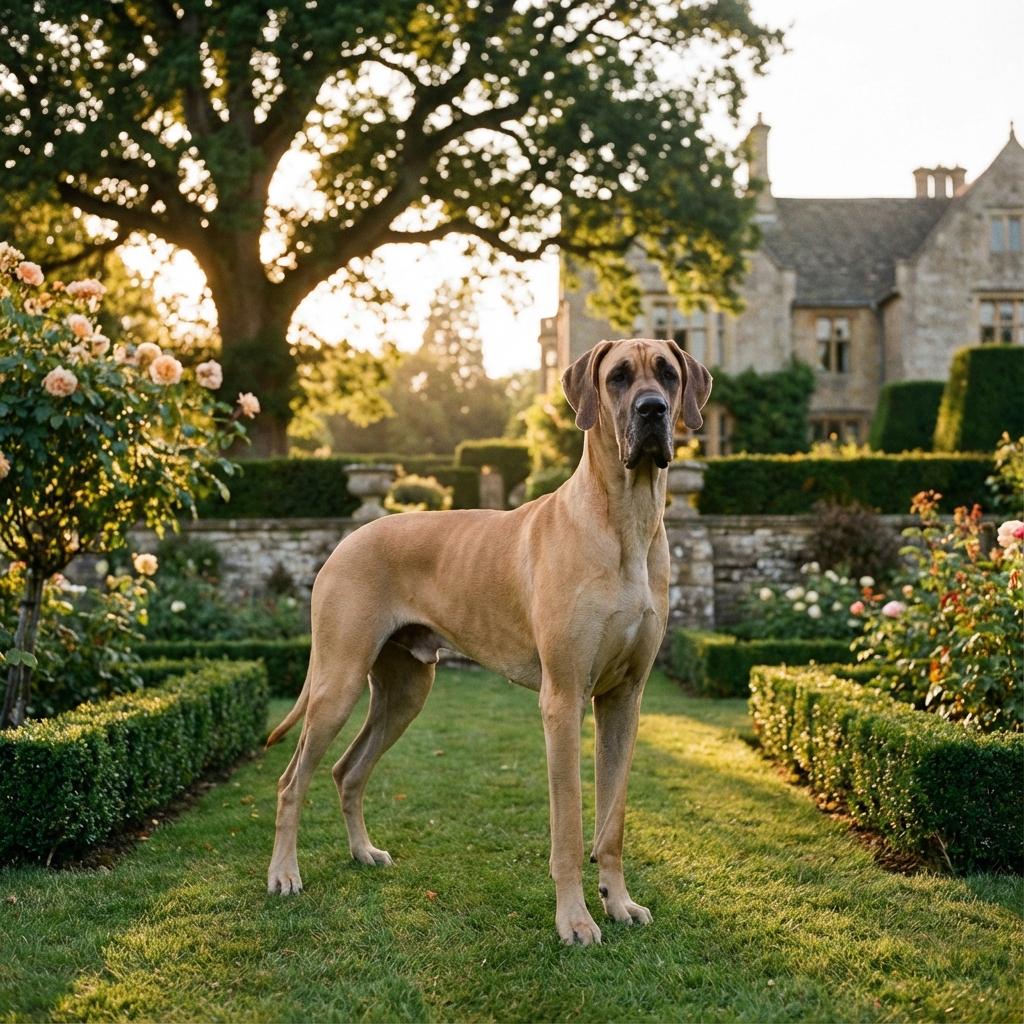
Great Dane
The Great Dane is a giant breed originating in Germany, historically used to hunt wild boar. Known a...

Leonberger
The Leonberger is a giant breed developed in the 1840s in Leonberg, Germany, by crossing Newfoundlan...

Mastiff
The Mastiff (Old English Mastiff) is one of the heaviest dog breeds in existence, with ancestors use...