
Newfoundland
The Newfoundland is a giant, gentle working dog originating in Canada, historically used by fishermen for water rescue and hauling nets. Known for its sweet temperament and exceptional swimming ability.
The Newfoundland (or “Newfie”) is a large, heavily-built breed weighing up to 150 pounds. They are known for their sweet disposition, their patience with children, and their strength as water rescue dogs.
J.M. Barrie based the fictional nursemaid dog Nana in Peter Pan on his own Newfoundland, Luath, illustrating the breed’s reputation for gentleness with children.
Their webbed feet, water-resistant coats, and powerful swimming ability have made Newfoundlands effective water rescue dogs over the centuries. Today, they are kept primarily as family companions.
History and Origin: The Fisherman’s Friend
As the name suggests, the breed originated in Newfoundland, Canada. They descend from dogs brought to the island by European fishermen (likely Great Pyrenees and Black Retrievers) mixed with native dogs.
Newfoundlands were bred to be the ultimate working partners for fishermen. They hauled heavy nets out of the freezing North Atlantic, pulled carts of fish to market, and yes, jumped into the water to save anyone who fell overboard.
Their reputation for bravery spread quickly. One famous Newfie named “Seaman” accompanied Lewis and Clark on their expedition across America (1804-1806), protecting the explorers from bears and hunting for food. Another Newfie reportedly saved Napoleon Bonaparte from drowning during his escape from Elba.
Physical Characteristics
The Newfoundland is an impressive, powerful dog with massive bone structure.
- Height: 26 to 28 inches at the shoulder.
- Weight: Males 130-150 pounds; females 100-120 pounds. Some can reach nearly 200 pounds.
Built for Water
Every part of the Newfoundland is designed for swimming:
- Webbed Feet: Act like paddles.
- Water-Resistant Coat: An oily outer coat keeps the icy water away from their skin.
- Rudder Tail: Their thick, strong tail acts as a rudder while swimming.
- Swimming Stroke: Unlike other dogs that do the “doggy paddle,” Newfies use a powerful breaststroke motion.
Coat and Colors
They have a flat, water-resistant double coat.
- Black: The most common color.
- Brown: Ranging from chocolate to bronze.
- Grey: Less common.
- Landseer: White with black markings (named after the painter Sir Edwin Landseer, who made this variety famous).
Temperament
The breed standard states that a sweet temperament is the “most important single characteristic of the breed.” Newfoundlands are patient, docile, and good with children.
Calm and Measured
Despite their size, they tend to move carefully around smaller people. They are rarely aggressive but are protective. If a stranger threatens their family, a Newfoundland will place itself between the threat and its people, using its size as a deterrent.
Intelligent and Sensitive
They are smart dogs who want to please, but they are also sensitive. Harsh training methods are counterproductive. They respond best to gentle guidance and positive reinforcement.
Attachment to Family
They prefer to be with their people. A 150-pound dog attempting to sit in a lap is a common occurrence. They do not do well as “backyard dogs” and can suffer from separation anxiety.
Energy Level and Exercise
Newfoundlands are low-to-moderate energy. They are happy to lounge on the couch (or the cool tile floor) for much of the day.
- Daily Walks: A 30-minute walk is essential to keep them fit.
- Swimming: They are strong natural swimmers and enjoy water access greatly.
- Carting: They enjoy pulling. Training them to pull wagons or carts gives them a sense of purpose.
Caution: Avoid strenuous exercise in hot weather. Their heavy coats make them very prone to heatstroke.
Health and Lifespan
The biggest heartbreak of owning a Newfoundland is their short lifespan, typically 9 to 10 years.
- Orthopedic Issues: Hip and elbow dysplasia are very common. Rapid growth as puppies can damage joints, so diet must be carefully monitored.
- Heart Conditions: Subvalvular Aortic Stenosis (SAS) is a serious heart defect found in the breed.
- Bloat (GDV): A life-threatening twisting of the stomach. Feed small meals and avoid exercise after eating.
- Cystinuria: A kidney/bladder stone condition.
Grooming: Drool and Fur
Owning a Newfoundland is messy. There is no way around it.
- Drool: They have loose jowls and drool… a lot. You will find drool on your walls, your clothes, and your ceiling. Many owners keep “drool rags” in every room.
- Shedding: They shed heavily year-round and “blow coat” twice a year.
- Brushing: Brush them 2-3 times a week to prevent mats and remove dirt.
- Bathing: A massive task. Many owners use a professional groomer simply because fitting a Newfie in a standard bathtub is a logistical nightmare.
Is a Newfoundland Right for You?
Yes, if:
- You want a devoted, loving companion who is great with kids.
- You have a large home (they take up a lot of floor space).
- You don’t mind mess (drool, mud, hair).
- You live in a cooler climate (they struggle in heat).
No, if:
- You are a “neat freak.”
- You live in a small apartment (technically possible due to low energy, but physically difficult).
- You cannot afford the cost of feeding and vetting a giant breed.
- You want a jogging partner (their joints can’t take long-distance running).
The Newfoundland is a devoted and patient breed. For owners who can accommodate the grooming demands, the drool, and the relatively short lifespan typical of giant breeds, they make reliable and gentle companions.
Related Breeds
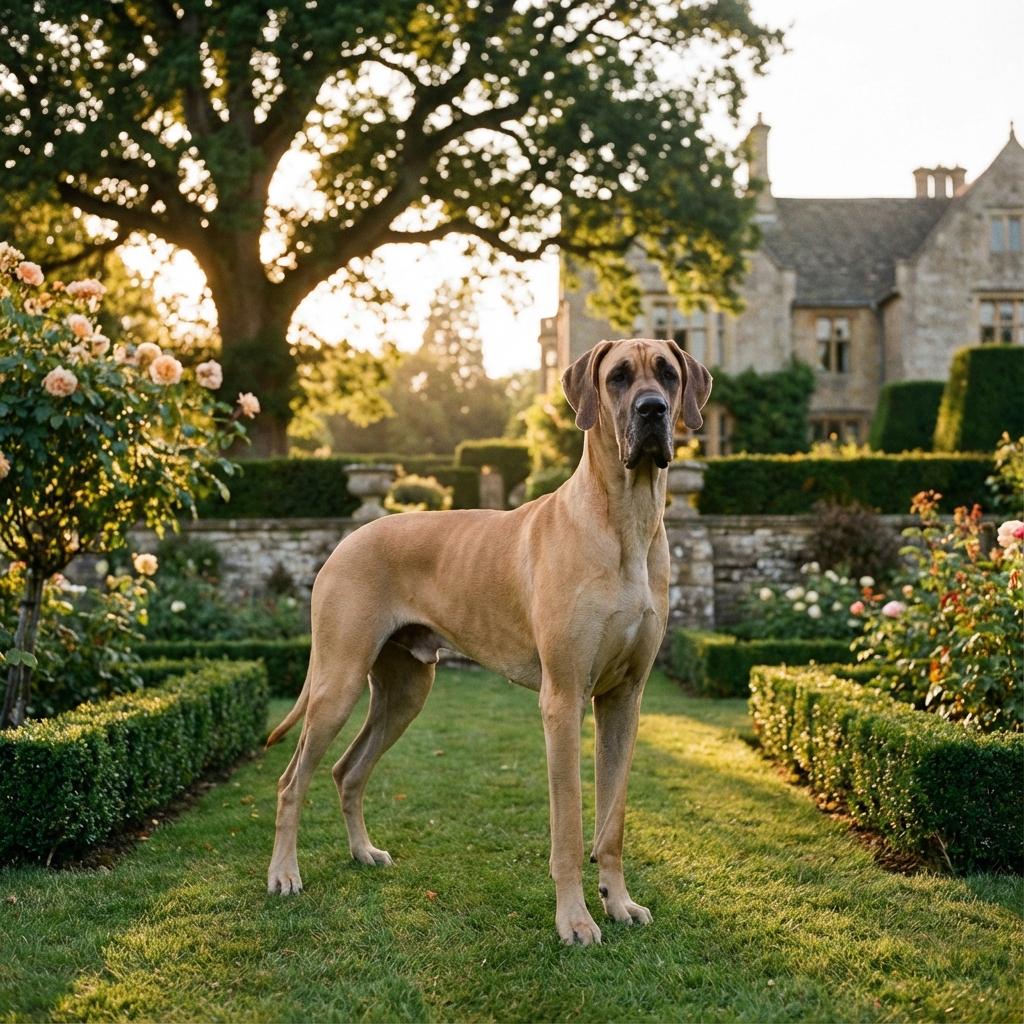
Great Dane
The Great Dane is a giant breed originating in Germany, historically used to hunt wild boar. Known a...

Irish Wolfhound
The gentle giant of Ireland, the Irish Wolfhound is the tallest of all dog breeds, known for his imm...

Leonberger
The Leonberger is a giant breed developed in the 1840s in Leonberg, Germany, by crossing Newfoundlan...