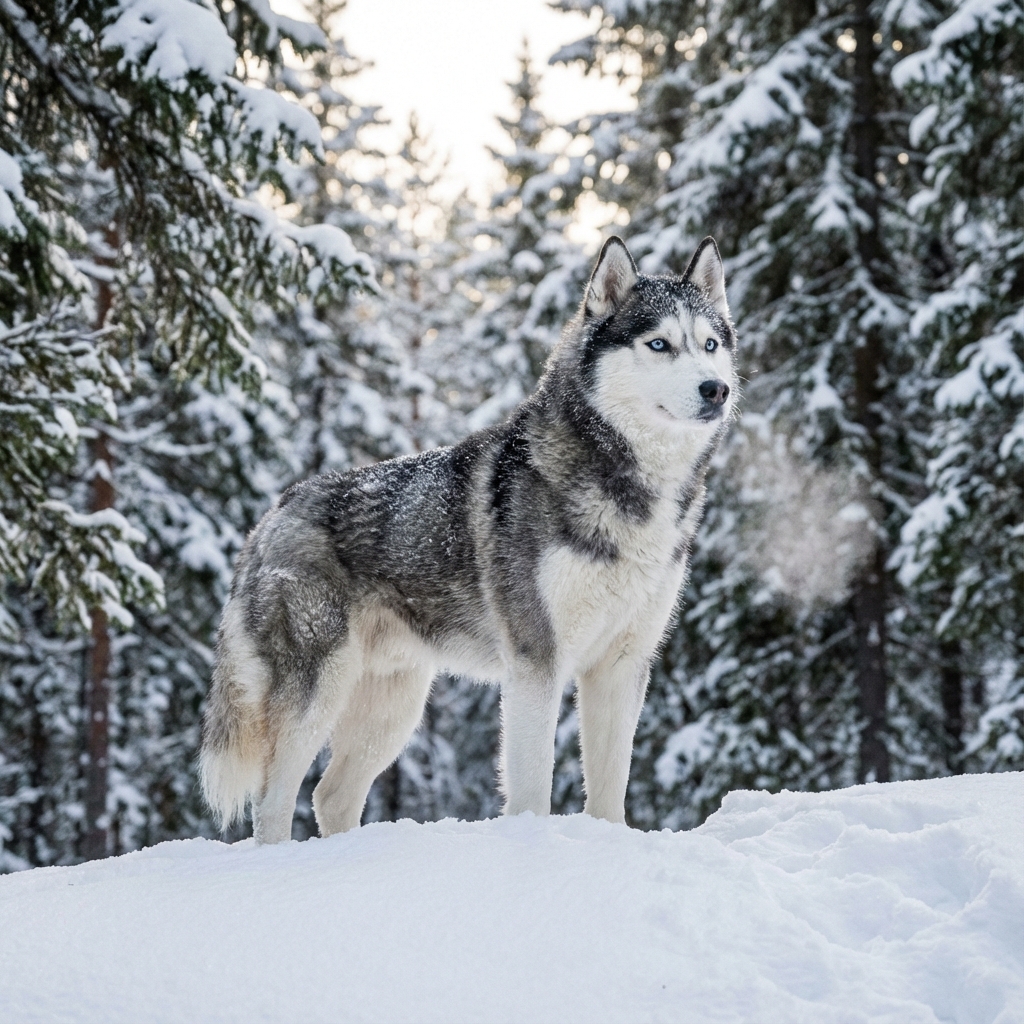
Siberian Husky
The Siberian Husky is a medium-sized working sled dog developed by the Chukchi people of northeastern Siberia for pulling light loads over long distances. Known for its thick double coat, striking eye colors, and independent temperament, the breed rose to international recognition during the 1925 Serum Run to Nome.
The Siberian Husky has a striking appearance — thick double coat, erect triangular ears, and often blue or multi-colored eyes — that has driven considerable popularity through film and television. However, their looks have attracted many owners unprepared for the breed’s genuine behavioral demands.
Huskies are not suitable for every household. They are high-energy working dogs bred to pull sleds over long distances in freezing conditions. They are escape artists with a strong prey drive, produce significant shedding, are very vocal, and are independent thinkers who may not respond reliably to commands. Owners who understand these needs and can provide adequate exercise will find them affectionate and energetic companions.
History and Origin: The Endurance Runner
The Husky was developed by the Chukchi people of the Chukchi Peninsula in northeastern Siberia.
- Ancient Roots: For thousands of years, the Chukchi bred these dogs to pull light loads over long distances at moderate speeds. The dogs were crucial to the tribe’s survival. They lived with the families, sleeping in the tents to provide warmth for the children, which explains their incredibly friendly and gentle nature toward humans.
- The Serum Run: In 1925, the breed became legendary during the Serum Run to Nome. When a deadly diphtheria epidemic struck the isolated town of Nome, Alaska, in the dead of winter, planes could not fly. Teams of Huskies and Malamutes relayed life-saving medicine over 674 miles of blinding blizzard and moving ice in just 5 and a half days. The lead dogs, Balto and Togo, became international heroes. This event cemented the Husky’s legacy as the ultimate endurance athlete.
Physical Characteristics: Built for the Cold
Huskies are smaller than most people think. They are medium-sized dogs, built for speed and endurance, not brute strength (unlike the larger Alaskan Malamute).
- Height: Males 21–23.5 inches (53-60 cm); Females 20–22 inches (51-56 cm).
- Weight: Males 45–60 pounds (20-27 kg); Females 35–50 pounds (16-23 kg).
The Coat
Huskies have a double coat that can withstand temperatures as low as -76°F (-60°C).
- Undercoat: Dense, soft, and downy. It traps warm air against the skin.
- Topcoat: Straight and smooth guard hairs that repel water and snow.
- Colors: They come in a wide variety of colors, from pure white to jet black, with various markings on the face (masks) that are unique to each dog.
- The Tail: A fox-brush tail that is carried over the back in a sickle curve when alert. When sleeping in the snow, the Husky curls up and covers his nose with his tail to warm the air he breathes.
The Eyes
Their eyes are a defining feature. They can be:
- Ice Blue: A piercing, pale blue.
- Brown: Warm and inviting.
- Bi-Eyed: One blue and one brown.
- Parti-Colored: Two different colors within the same eye (e.g., a brown eye with a blue wedge).
Temperament and Personality
The Husky personality is… unique. They are more like cats than dogs in some ways.
Friendly to a Fault
Huskies make terrible watchdogs. They have zero guard instinct. If a burglar breaks into your house, a Husky will likely greet them with a wagging tail, show them where the good silver is kept, and ask for a belly rub. They love everyone. They do not have the suspicion of strangers found in breeds like the German Shepherd.
Vocalization
Huskies are highly vocal. They rarely bark, but they howl, “talk,” whine, and grumble to communicate displeasure or attention-seeking. This vocalization is frequent and can be disruptive in multi-unit housing.
High Prey Drive
They are predatory. The Chukchi allowed them to hunt for their own food in the summer. This instinct remains strong. They should generally not be trusted with cats, rabbits, hamsters, or small dogs. They can be fast and deadly hunters.
Training and Exercise Needs
The Escape Artist
Huskies are the Houdinis of the dog world. They believe a fence is just a suggestion.
- Digging: They will dig under a fence in minutes.
- Jumping: They can clear a 6-foot fence from a standstill.
- Chewing: They can chew through wood and chain link.
- Running: You absolutely cannot let a Husky off-leash in an unfenced area. Their recall is non-existent if they see a squirrel or just want to run. They will run until they are lost. A GPS collar is highly recommended.
Exercise: A Way of Life
A Husky needs to run. A walk around the block is a warm-up.
- Daily Needs: At least 60-90 minutes of vigorous activity every day.
- Activities: They make excellent running, hiking, and biking partners (in cool weather). They excel at skijoring (pulling you on skis) and bikejoring. If you don’t give them an outlet, they will destroy your house.
Training: The Negotiation
They are intelligent but not obedient. They are independent thinkers. They will look at you, process your command, and decide if it is worth their effort.
- Motivation: You must make it worth their while. They are generally food-motivated.
- Leadership: You must be a strong, consistent leader (alpha), or they will take charge. But harshness doesn’t work; they will just shut down or scream at you.
Health and Lifespan
Huskies are a very healthy, “natural” breed with a lifespan of 12 to 14 years.
- Cataracts: Juvenile cataracts can appear in young dogs.
- Progressive Retinal Atrophy (PRA): An eye disease causing blindness.
- Hip Dysplasia: Less common than in many other breeds of this size, but still a risk.
- Zinc Deficiency: Some Huskies have a genetic inability to absorb zinc from their food, leading to skin issues. They may need zinc supplements.
Grooming and Care
- The “Blow”: Twice a year (spring and fall), they “blow coat,” shedding their entire undercoat over a period of 2-3 weeks. During this time, you will pull out clumps of fur by the handful. You will have tumbleweeds of hair in your house.
- Self-Cleaning: Surprisingly, they are very clean and odorless. They groom themselves like cats and rarely need baths (unless they roll in something gross).
- Heat Sensitivity: They are arctic dogs. Do not exercise them in the heat. AC is a must in summer. Never shave a Husky; their coat protects them from heat as well as cold.
Is a Siberian Husky Right for You?
The Husky is a lifestyle, not a pet.
Yes, if:
- You are an extreme athlete. You run 5 miles a day and want a partner.
- You have a very secure, high fence. You have a “fortress.”
- You want a friendly dog. You don’t need a guard dog.
- You have a sense of humor. You enjoy a dog that talks back.
No, if:
- You want a dog that obeys instantly. Get a Golden Retriever.
- You work long hours. A lonely Husky is a destructive Husky.
- You have cats. It’s a risk.
- You care about a pristine home. The fur is everywhere.
The Siberian Husky is a demanding but rewarding breed for owners who can provide extensive daily exercise, a securely fenced environment, and consistent training. Those prepared to meet these requirements will find them energetic, friendly, and engaging companions.
Related Breeds

American Pit Bull Terrier
The American Pit Bull Terrier is a medium-sized, athletic working dog developed in the United States...

American Water Spaniel
The American Water Spaniel is a rare, dual-purpose hunting breed developed in the river valleys of W...

American Staffordshire Terrier
The American Staffordshire Terrier is a muscular, medium-sized breed developed from Bull-and-Terrier...